Along with some welcome weather, April also brought a lineup of eye-catching headlines worth talking about. Here’s what stood out to us this month:
Brands take on April Fools
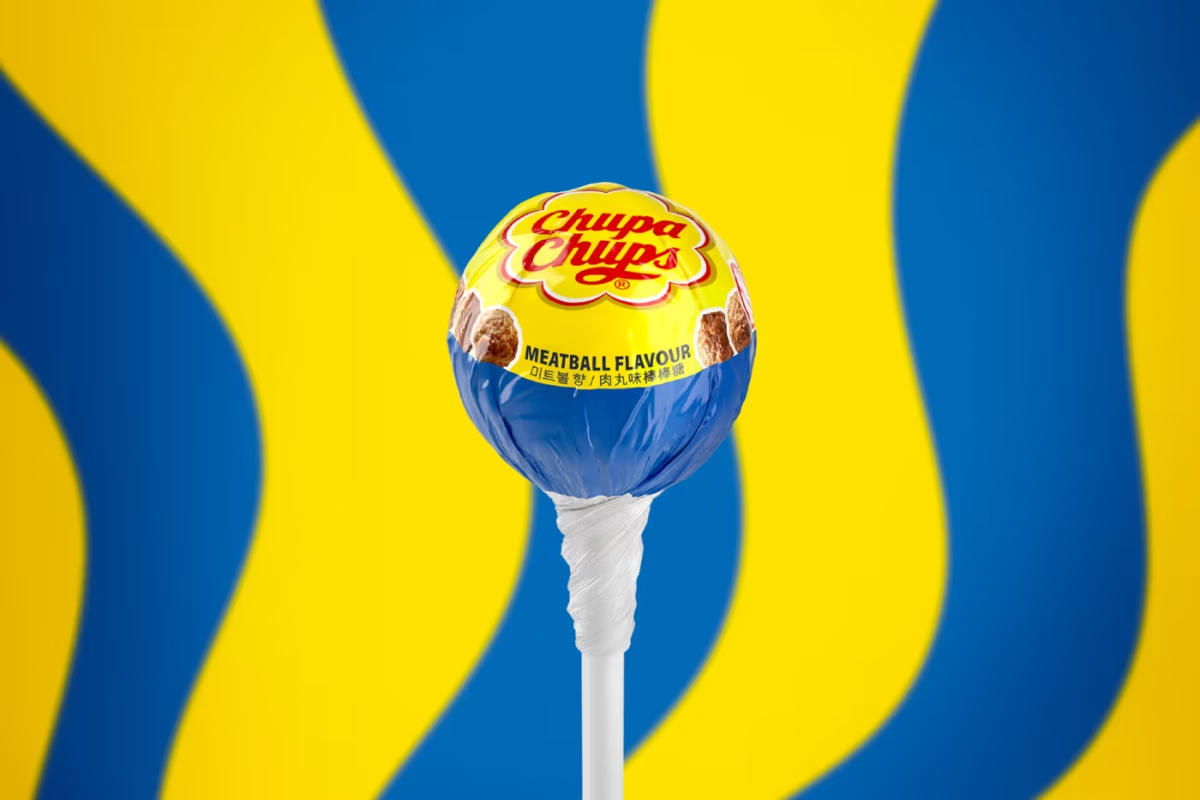
We have the distinction of celebrating the launch of CTP on April 1. But for lots of brands April Fools’ continues to be a moment to drive awareness, engagement, and reach. This year we saw the blurring of fiction and reality through giveaways, limited drops, and even turning pranks into real products. A standout example is IKEA’s partnership with Chupa Chups, where a playful concept became a tangible product, with one million Swedish meatball–flavored lollipops set to be distributed in-store this June. At the same time, purely fictional launches still proved effective. Raising Cane’s introduced “Sauce Coke,” created with Coca-Cola and promoted by actress Mckenna Grace, generating widespread conversation without ever existing as a product. Together, these campaigns show how brands are treating April Fools’ as a strategic investment, where even fully fabricated ideas can deliver real returns.
Coachella’s Formula: Activations, Nostalgia, and FOMO
Coachella isn’t just a music festival anymore; it’s a week-long marketing playground where brands show up as part of the culture, not just sponsors. Underpinning it all in 2026 was a clear consumer pull toward throwback exclusivity—nostalgia, but packaged as something you had to be there for. Starbucks leaned in by bringing back its iconic Unicorn Frappuccino and turned it into an IRL café activation on-site because apparently 2016 is alive and thriving in the desert. On stage, Justin Bieber delivered one of the biggest throwback moments, revisiting his early career and singing alongside footage of his younger self, and fans relived his early era in real time. Some even dubbed it “Bieberchella,” with Gen Z and Millennials equally locked in.
At Coachella, the brands that won weren’t simply showing up as sponsors. They created moments people actively wanted to step into and share, like the perfectly picturesque Rhode x 818 collaboration. Built around a photo booth-style experience, it paired tequila drinks with Rhode’s lip peptide products in a setup designed almost entirely for social sharing. Even as Coachella continues to grow in cultural weight and price point, demand doesn’t appear to be slowing. If anything, the hyper-curated experience paired with its exclusivity only reinforces its position as one of the most sought-after stages for both artists and brands.
A Messaging Misstep
There’s no single way to approach a marathon, and that’s exactly why Nike found itself under scrutiny this month. In the lead-up to the 130th Boston Marathon, the brand placed a storefront sign along the route reading “Runners Welcome. Walkers Tolerated.” What may have been intended as motivational quickly landed as exclusionary in the context of a race that includes para athletes, adaptive runners, and participants who walk for various reasons. After about a week of backlash, Nike removed the sign and acknowledged it missed the mark. Brands like our friends at ECCO and ASICS used that to send participants a different message. It’s a sharp reminder that in culturally significant moments like the Boston Marathon, marketing isn’t just about visibility. It’s about understanding the full spectrum of participants and the impact a message can carry.
In the Feed:
Gamified Snap Map
- Snapchat continues to lean into gamification and real-world engagement as a way to keep users active. This month, snapchat launched Place Loyalty on Snap Map, a feature that ranks users based on how frequently they visit specific locations. Users can earn Gold, Silver, or Bronze badges depending on their activity, adding a competitive layer to everyday movement while keeping rankings private unless shared. It’s another example using lightweight incentives to drive repeat engagement and keep users coming back into the ecosystem.
The Webby Awards spotlight
- The Webby Awards, often considered the “Oscars of the Internet,” spotlight the best across digital, from creators to brands and emerging tech. This year, creators like Kylie Kelce, Keith Lee, and Druski took center stage, alongside recognition for AI tools like Claude, a clear signal of where the industry is heading. Together, the winners reflect an internet increasingly shaped by creator influence, cultural relevance, and AI-powered innovation.
LinkedIn Expands AI Search Tools
- LinkedIn is rolling out expanded AI-powered conversational search, allowing users to search in natural language instead of relying on keywords. The update surfaces more relevant people, posts, and companies based on context, profile data, and activity, making this another step toward AI-driven search becoming the default across social platforms.
Catch you in May!