
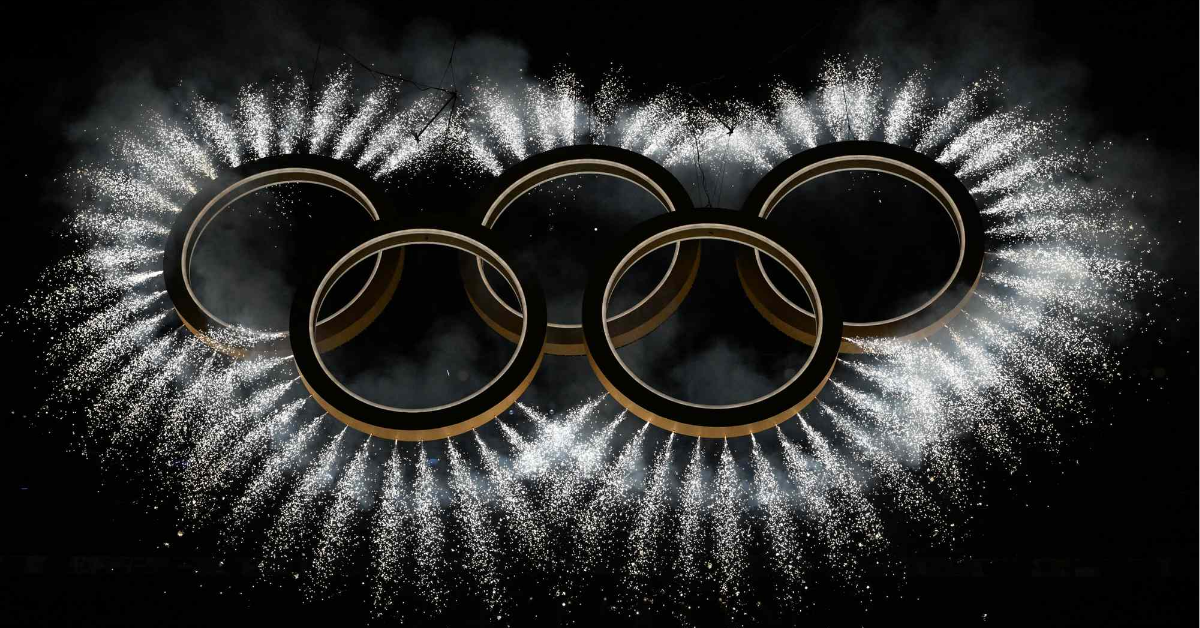
From the Miracle on Ice and the Agony of Defeat to the rise of Eddie Eagle and the tragic attack on Nancy Kerrigan, viral Olympic moments are nothing new. Long before hashtags and social platforms, the Olympic Games produced scenes so powerful that they embedded themselves into global consciousness.
What has changed is how those moments spread. In the era of social media, Olympic moments no longer live only on grainy highlight reels or nightly news broadcasts. They circulate instantly, shaped by fans, athletes, and culture in real time. And increasingly, the moments that capture attention are not just about winning gold.
There is something deeply intriguing about what captures viewers’ attention, why certain moments feel irresistible, why they entertain us, and why they spread so quickly. That shift didn’t happen overnight, but became unmistakable in 2012.
The First Olympic Meme
For many, myself included, the Fab Five were the team to watch during the London games. And though many moments from those games were both historic and memorable, the most viral was gymnast McKayla Maroney’s unimpressed expression on the podium after winning silver in the vault. This image spread across the internet almost immediately. Her reaction became one of the earliest true Olympic memes, shared and remixed far beyond gymnastics coverage.
It marked a moment when Olympic audiences stopped being passive viewers and started participating in the conversation in real time.
Celebrity Enters the Picture
In recent Games, virality has often come from outside competition itself. Snoop Dogg became a recurring Olympic presence, turning events into social moments through sheer enthusiasm, from cheering on Team USA to swimming with Michael Phelps. His appearances helped broaden the reach of Olympic coverage beyond traditional sports audiences.
In Paris, Jason Kelce emerged as an unlikely fan favorite, leaning into the role of superfan rather than celebrity guest. Much of that momentum came through Ilona Maher, one of the breakout stars of the Games. Meanwhile, Flavor Flav’s outspoken fandom of women’s water polo offered a similar kind of amplification, drawing attention to athletes and events that often go overlooked.
Moments That Weren’t About the Medal
Some Olympic moments go viral because of how unexpectedly something happens.
During the Paris Games, Stephen Nedoroscik, quickly dubbed “Pommel Horse Guy,” drew attention for sitting perfectly still throughout the men’s gymnastics team final. When his moment arrived, he delivered a clutch pommel horse routine that helped secure a bronze medal for Team USA. The contrast between prolonged stillness and precise execution quickly turned him into ideal meme material.
A similar dynamic played out in the shooting range. Turkish shooter Yusuf Dikeç went viral for his understated approach, competing without specialized eyewear or high-tech equipment. His calm, and oddly casual presence stood out in a visually intense sport and made him an unexpected fan favorite.
That same sense of contrast drove conversation around breaking’s Olympic debut, where an Australian breakdancer went viral for a routine that challenged audience expectations. The performance sparked debate and a lot of laughs, bringing a new and unfamiliar sport into the cultural spotlight.
Life Inside the Olympic Village
Some of the most shared Olympic moments have nothing to do with competition. Norwegian swimmer Henrik Christiansen became a breakout non-sporting story after posting a series of TikTok videos from the Olympic Village highlighting his obsession with the dining hall’s chocolate muffins. Rating them an exaggerated 11 out of 10, hoarding them in drawers, and filming himself eating them throughout the village, Christiansen proudly crowned himself the “Olympic Muffin Man,” a title he still holds today.
That same behind-the-scenes curiosity fueled another viral subplot during the Tokyo 2021 Games, when rumors spread that Olympic Village beds were made of cardboard. Athletes tested them on camera, jumping on them and reviewing their durability. A practical sustainability choice quickly became one of the most talked-about moments of the Games.
From a social perspective, the Olympics create the ideal conditions for virality. The audience is massive, emotions run high, and stories unfold in real time. When a moment feels shared rather than staged, it moves quickly and lingers long after the closing ceremony.
For brands, the takeaway is not to compete with the spectacle, but to lean into it. When the world is already paying attention, the brands that listen closely and respond thoughtfully are often the ones that become part of the larger story.
No matter the content or the reason for virality, the Olympics remain a rare moment in time when the world watches together. And that shared attention is what makes Olympic moments so powerful and keeps audiences engaged year after year.